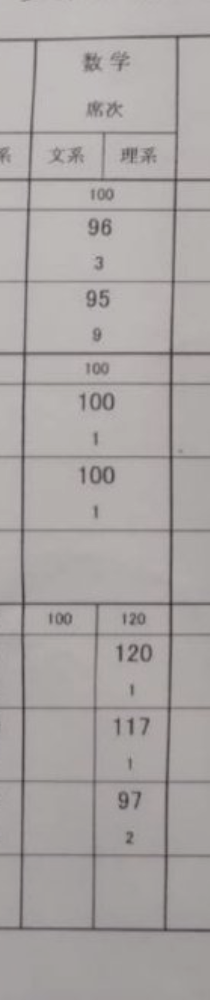
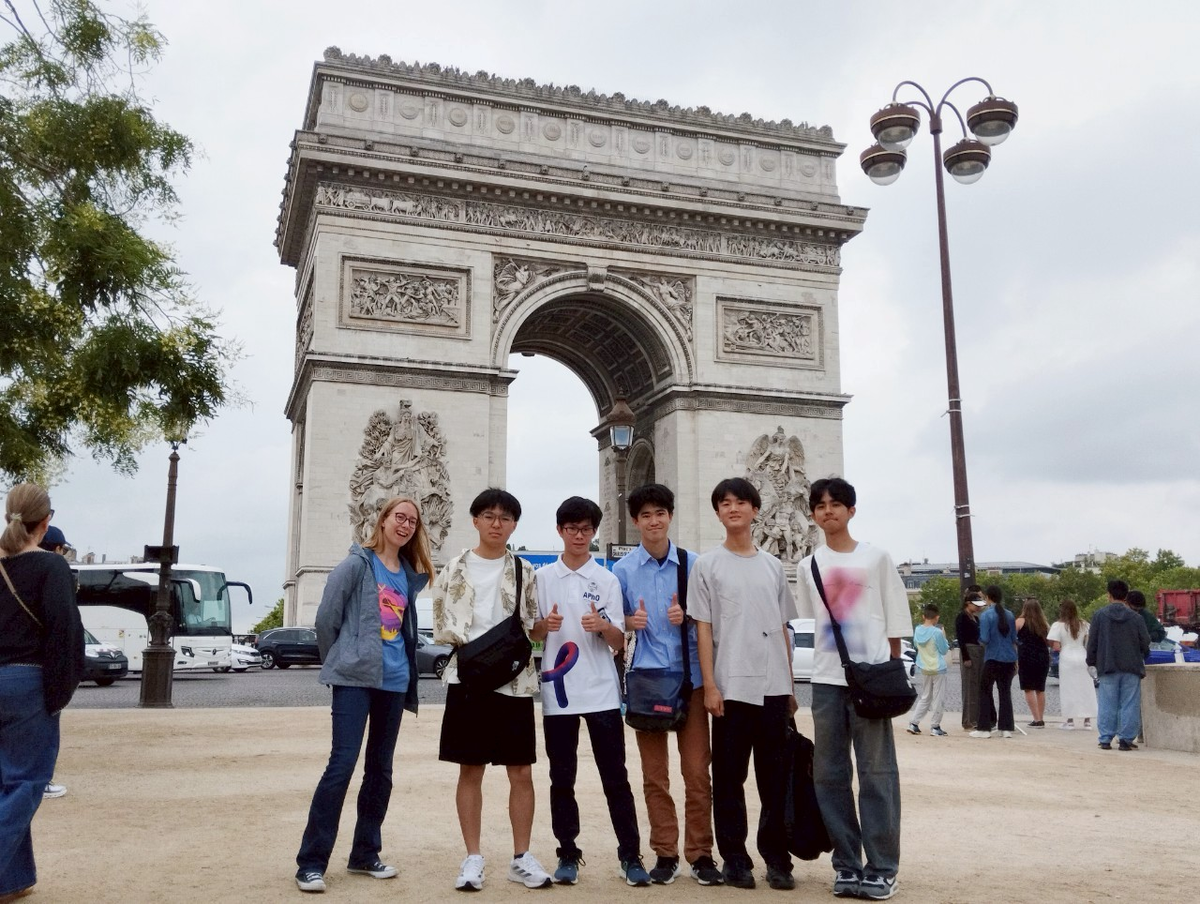
これで最後。
数オリ、物オリ、実テ、東大模試
いろんな"ペーパーテスト"で6年間楽しんできた。
まあはっきり言ってそれが得意以外あんまり良い所はないと思う。
それももうこれで終わりにしようと決めている。
だってこれが"最後"だから。
周りには悪いが全力でやらしてもらう
東京大学理科1類 第2次学力試験.
これで最後。
数オリ、物オリ、実テ、東大模試
いろんな"ペーパーテスト"で6年間楽しんできた。
まあはっきり言ってそれが得意以外あんまり良い所はないと思う。
それももうこれで終わりにしようと決めている。
だってこれが"最後"だから。
周りには悪いが全力でやらしてもらう
東京大学理科1類 第2次学力試験.
この記事は毎日数学の問題を解く企画 "勝手に数学アドベントカレンダー" 6日目です。 (1~3日目は存在しません.)
今日は東大実戦の夏のちょっとバズった問題を解きます.
昨日の記事
[!info] 東大実戦 2025 第1回(夏) 第4問
$\log x$ の底は $e=2.71\ldots$ とする. このとき, 以下の条件が成り立つ実数 $a$ の範囲を求めよ.
- 任意の正実数 $x$ に対して, $ \log x \leqq \left \lfloor \dfrac{1}{2} x + a \right\rfloor$
[!end]
まあ見た目は簡単だが記述面の評価が厳しい駿台ということもあってめんどくさい. できるだけ楽したい. 整数部分を固定したいが, 左辺を $m+r$ とおくと, 右辺は $\geqq m+1$ と制限がかけられるのでよさそう.
解答例の $\lfloor a\rfloor$ で場合わけとかよりは気持ちよく解けてるはず.
まず, $x=e^t$ と置換して, 条件を,
と書き直す. そして, 任意の実数 $t$ に対して, 整数 $m$ と実数 $0<r\leqq 1$ に対して, $$ t = m+r $$ と書く. ( 注意 : $m$ は整数部分ではなくて, $t$ が整数の場合の扱いが違う )
このとき, 左辺は $m+r$ のとき, 右辺は整数値しか取らないので $m+1$ 以上である必要があるので,
つまり,
と同値. 移項すると,
となるので, $m$ が整数, $r$ が $0<r \leqq 1$ を動く時の $$ f(m,r) = m + 1- \dfrac{1}{2} e^{m+r} $$ の取りうる値を考えればよい.
$m$ を固定した時, $f(m,r)$ は $$ m+1 - \dfrac{1}{2} e^{m+1} \leqq f(m,r) < m+1 - \dfrac{1}{2} e^{m} $$ を動くので, $h(t) = t - \dfrac{1}{2} e^t$ とおくと, この範囲は $$ h(m+1) \leqq f(m,r) <h(m)+1 $$ と表せる. $h'(t) = 1- \dfrac{1}{2} e^t $ なので, $h(t)$ の増減は, $$ \cdots < h(-1) < h(0) \left(= -\frac{1}{2} \right)< h(1) \left(= 1-\frac{e}{2} \right)> h(2) > \cdots $$ となる. なので, $h(m)+1$ が取りうる最大値は $h(1) + 1 =2-\dfrac{e}{2}$.
つまり, 条件を満たすには $a\geqq 2-\dfrac{e}{2}$ が必要で, 逆にこの時任意の $m,r$ で $f(m,r)\leqq 2-\dfrac{e}{2}$ なので, 求める条件は $$ \boxed{a\geqq 2-\dfrac{e}{2}} $$ である. (おわり)
この記事は毎日数学の問題を解く企画 "勝手に数学アドベントカレンダー" 5日目です。 (1~3日目は存在しません.) 4日目は
今日は去年の東大数学の難問と言われている問題をいい感じに解けたので紹介します。
[!info] 東大理系数学2025第5問
$n$ を $2$ 以上の整数とする。$1$ から $n$ までの数字が書かれた札が各 $1$ 枚ずつ合計 $n$ 枚あり,横一列におかれている。$1$ 以上 $(n-1)$ 以下の整数 $i$ に対して,次の操作 $({\rm T}_i)$ を考える。
$({\rm T}_i)$ 左から $i$ 番目の札の数字が,左から $(i+1)$ 番目の札の数字よりも大きければ,これら $2$ 枚の札の位置を入れかえる。そうでなければ,札の位置をかえない。
最初の状態において札の数字は左から $A_1, A_2, \ldots, A_n$ であったとする。この状態から $(n-1)$ 回の操作 $({\rm T}_1), ({\rm T}_2), \ldots, ({\rm T}_{n-1})$ を順に行った後,続けて $(n-1)$ 回の操作 $({\rm T}_{n-1}), \ldots, ({\rm T}_2), ({\rm T}_1)$ を順に行ったところ,札の数字は左から $1, 2, \ldots, n$ と小さい順に並んだ。以下の問いに答えよ。
(1) $A_1$ と $A_2$ のうち少なくとも一方は $2$ 以下であることを示せ。
(2) 最初の状態としてありうる札の数字の並び方 $A_1, A_2, \ldots, A_n$ の総数を $c_n$ とする。$n$ が $4$ 以上の整数であるとき,$c_n$ を $c_{n-1}$ と $c_{n-2}$ を用いて表せ。
[!end]
つまり左から順にソートしていって, 行って戻ってしかしないでも並ぶのは何通りありますかという問題になる. (1) は簡単だが, (2) で (1) の場合分けに乗ろうとすると被りなどが出てきて大変であとはどのように帰着するか難しい問題になる.
じゃあどうするかというと, 普通のDPの問題だと思って, 状態を遷移しやすいように区別しようとする. 具体的には "先頭が1か" で場合分けするとうまくいく. なぜならば
先頭が $1$ になる長さ $n$ の順列 → $1$ は絶対動かないので長さ $n-1$ の順列に帰着できる
先頭が $1$ にならない → まず $A_2$ が $1$ なら初めの操作で $1$ が左に来るので, また長さ $n-1$ の順列に帰着できる
で, $A_1$ も $A_2$ も $1$ でないとき (1) からそれは $2$ と デカい数なので, 初めの操作で $2$ が左に来るが, そのあとは $(1,3,\ldots ,n) $ の並び替えで、先頭が $1$ でない ものに帰着できる
ので漸化式が立つ.
で, その補助的なdpテーブル(数列)の名前を $a_n$, $b_n$ とすると, $a_n+b_n=c_n$ で問題文通りになるので, おそらくこれが想定解なんじゃないかと思いました. 上をぐだぐだ書いたのが下の解答.
$n=2$ の場合は自明. $n\geqq 3$ のとき, $(\rm T_1)$ で $A_1$ と $A_2$ の小さい方が一番左に来て, 続く $\rm (T_2), \ldots , (T_{{\it n}-1}), (T_{{\it n}-1}), \ldots (T_2)$ で一番左の札は動かず, $(\rm T_1)$ でその札は左から $1$ 番目か $2$ 番目にくる. それは $1$ または $2$ でなければならないので, $\min(A_1,A_2)\leqq 2$ がいえる.
$n\geqq 2$ を整数とする. $1$ から $n$ の整数を並び替えた札 $A_1$, $A_2$, $\ldots$ , $A_n$ が, 操作 $\rm (T_1), (T_2), \ldots , (T_{{\it n}-1}), (T_{{\it n}-1}), \ldots (T_2), (T_1)$ で並び替えられるとする. このとき,
ことにする. そして, $n\geqq 2$ に対して,
と定義する. このとき $c_n = a_n + b_n$ であり, 以下の(i)(ii)2つの等式が証明できる.
よい ${\bf P}_n$ であって $A_1=1$ のものと, よい ${\bf P}_{n-1}$ は, 一対一対応する.
なぜならば, ${\bf P}_{n-1} : {A}_1', \ldots {A}_{n-1}'$ に対して, ${\bf P_n} : 1,({A}_1'+1), \ldots ,({A}_{n-1}'+1)$ を作ると, ${\bf P}_{n-1}$ がよいとき, またそのときに限り ${\bf P}_n$ もよいからである.
従って, 前者は $a_n$ 個, 後者は $c_{n-1}$ 個あることから $a_n = c_{n-1}$.
よい ${\bf P}_n$ で, $A_2=1$ を満たすものは, よい ${\bf P}_{n}$ で, ${A}_1=1$ をみたすものと一対一対応する.
なぜならば, $(\rm T_1)$ の後最も左に $1$ が来て, そのときできた並び ${\bf P}_n'$ がよいとき, またその時に限り ${\bf P}_n$ もよいからである.
つまり, よい ${\bf P}_n$ で, $A_2=1$ を満たすものの個数は $a_n$ 個.
次に, (1)より, よい ${\bf P}_n$ は $\min(A_1,A_2)\leqq 2$ を満たすので, $A_1\neq 1, A_2\neq 1$ を満たすよい ${\bf P}_n$ は, $$ ({A}_1, {A}_2) = (2,x) \text{ または } (x,2) \quad (\text{ $x$ は 3 以上の整数}) $$ を満たす. $({\rm T}_1)$ を行ったあと, 札の並びは $$ 2,x,{A}_3, \ldots {A}_n $$ となっていて, ここで, 札の並び $x,{A}_3, \ldots ,{A}_n$ の並びであって ${\bf P}_n$ が よく なるものと, $A'_1\neq 1$ を満たすよい ${\bf P}_{n-1}' : {A}_1', \ldots ,{A}_{n-1}'$ は一対一対応する.
具体的には, $A'_1\neq 1$ を満たすよい ${\bf P}_{n-1}'$ に対して, $2$ 以上の要素に $1$ を足した ${\bf P}_{n-1}''$ も, 操作$\rm (T_1), (T_2), \ldots , (T_{{\it n}-2}), (T_{{\it n}-2}), \ldots (T_2), (T_1)$ を行うと $1,3,\ldots n$ になり, またそれは ${\bf P}_{n-1}'$がよいときのみにおこる. そのような ${\bf P}_{n-1}''$ に対して, $2$ の右に ${\bf P}_{n-1}''$ をくっつけたものに操作 $\rm (T_2), \ldots , (T_{{\it n}-1}), (T_{{\it n}-1}), \ldots (T_2)$ を行うと $2,1,3,\ldots ,n$ になり, 最後に $(\rm T_1)$ を行うと $1,2,3,\ldots ,n$ になるので, 結果的に $A'_1\neq 1$ を満たすよい ${\bf P}_{n-1}'$ と札の並び $x,{A}_3, \ldots ,{A}_n$ の並びは一対一対応する.
つまり, $A_1\neq 1, A_2\neq 1$ を満たすよい ${\bf P}_n$ の個数は, $A'_1\neq 1$ を満たすよい ${\bf P}_{n-1}'$の個数の $2$ 倍で, $2b_{n-1}$ 個.
以上より, $b_n=a_n+2b_{n-1}$ が従う.
(i)(ii) から, $n\geqq 4$ に対して $$ \begin{align} c_n &= a_n + b_n \ &= 2a_n + 2b_{n-1}\ &= 2c_{n-1} + 2(c_{n-1}-a_{n-1})\ &= 4c_{n-1} - 2a_{n-1} \ &= 4c_{n-1} -2c_{n-2}\end{align}$$ が成り立ち, 答えは $\boxed{c_{n}=4c_{n-1}-2c_{n-2}}$ となる.
毎日数学の問題を解く企画 "勝手に数学アドベントカレンダー" 4日目です。 (1~3日目は存在しません.)
[!info] 数オリ春2025_4
$n$ を正の整数とする.$n$ 人の生徒が徒競走を $n$ 回行った.それぞれの徒競走では,$n$ 人全員に順位がつけられ,同じ順位となる 2 人はいなかった.ここで,正の整数の組 $(a,b)$ に対し,生徒が称号 $(a,b)$ をもつとは,その生徒が少なくとも $a$ 回の徒競走で上位 $b$ 人に含まれていることをいう.また,生徒の得点を,その生徒がもつすべての称号 $(a,b)$ における $a-b$ の最大値として定める.このとき,$n$ 人の生徒の得点の総和としてありうる最大の値を求めよ.
[!end]
この前実テが返されましたね. 自分は $2$ 回 $1$ 位を取っているので, 称号 $(2,1)$ を持っています. あんがいどうやっても称号は取れないことがわかります. ごちゃごちゃやってると
1位 1, 1, 1, 1 (4回1位なので3点)
2位 2, 2, 2, 2 (4回2位なので2点)
3位 3, 3, 3, 3 (4回3位なので1点)
4位 4, 4, 4, 4 (4回4位なので0点)
みたいな偏った分布だと点数が稼げることがわかります.
求める最大値は $\boxed{\dfrac{n(n-1)}{2}}$ であることを示す.
構成は, 人 $k$ が順位 $k$ を $n$ 回取り続けた時, 人 $k$ は $a=n$ 回の競争で上位 $b=k$ 人に入っているので, その人は $n-k$ 点を得るので, 合計点は $(n-1)+\cdots + 0=\dfrac{n(n-1)}{2}$ 点になる.
評価をする.
人 $k$ が取った順位を, 昇順に $$ a_{k,1}, a_{k,2}, \ldots ,a_{k,n} $$ と並べてみる. このとき, 人 $k$ のスコア $s_k$ は, $p$ を任意として $$ s_k = \max_{p=1,2,\ldots,n} (p - a_{k,p}) $$ と書ける. これが各 $k$ で最大となる $p$ を $p_k$ とするとき, スコアの合計を $S$ とすると, $$ S = \sum_{k=1}^{n} s_k = \sum_{k=1}^{n} \left(p_k-a_{k,p_k}\right) $$ である. 今から, " 順位及び $p_1, p_2, \ldots ,p_n$ がそれぞれ任意に固定されているとき, $S\leqq \tfrac{n(n-1)}{2}$ を示す.
まず, 人の番号付けを $a_{k,p_k}$ の昇順になるように付け直す. つまり, $p_1, p_2, \ldots ,p_n$ および人が取った順位の集合は固定して, 単に人のラベルを $$ a_{1,p_1} \leqq a_{2,p_2} \leqq \cdots \leqq a_{n,p_n} $$ と付け直す. このとき, 各人 $k$ に対して順位は昇順に並んでいるので,
は成立しているはずである. そして, ${a_{k,i}}$ は $1$ が $n$ 個, $2$ が $n$ 個 ... $n$ が $n$ 個現れる数列であることを思い出すと, この数列から $P$ 項取り出した時その最も大きいものは $\left\lceil \tfrac{P}{n} \right\rceil$ 以上なので,
がいえる. 以上より, 天井関数も評価して$$ \sum_{k=1}^{n} a_{k,p_k} \geqq \sum_{k=1}^{n} \left\lceil\dfrac{\sum_{j=1}^{k} p_j}{n}\right\rceil \geqq \sum_{k=1}^{n} \left(\dfrac{\sum_{j=1}^{k} p_j}{n}\right) $$ がわかるので, $p_k\leqq n$ にも気をつけると $$ S \leqq \sum_{k=1}^{n} \left(p_k-a_{k,p_k}\right) \leqq \sum_{k=1}^{n} \left(p_k - \frac{1}{n} \sum_{j=1}^{k} p_k \right) = \sum_{k=1}^{n} \frac{k-1}{n}\cdot p_k \leqq \sum_{k=1}^{n} (k-1) = \frac{n(n-1)}{2} $$ より示された.
UTリアルバトルで少しでもいい点を取るためのハックをまとめた。東大に通じるとかではなく、リアルバトルだけの即席のハックであることに注意されたい。 特にリアバト特有の地雷とかを解説している。
[!INFO] 配点 (全部で40点)
(1)~(3) が 6×3=18点。
(4) が16点。
(5) 漢字が 2×3=6点。
[!end]
まずこれらの問題はまる三角ばつ採点をされることに気をつけたい。いつもの要素加点採点ではない。

要するに、
というルールで、これだと従来のたくさん要素を詰め込むという戦術があまり通用しなくなっている。また、講評を読むと"主体性"という言葉が多用されていて、あまりどういう意味なのかはわかっていないが、意味の通る説明になっていることを重要視しているような気がする。
[!NOTE] 現代文 (1)~(3) するべき/しないべき
あまりたくさん要素を詰め込むことをしない。(それで点が入りやすくなるわけではないので)
文章を切り貼りしない (つまり主体性が欠けているので)
文章が長くなり意味が通じずらくなる答案は書かない
それなりにわかりやすく、意味が通る答案を作る。
とりあえず無難な説明として通っている答案を作ることを目指す(つまりバツ回避ということ)
丸を狙いたければ説明に付属で具体化/譲歩などを入れる? (よくわかんないです)
[!end]

120文字はだいたい6要素ぐらいに分けられて、各2~4点の加点の採点(つまり、"いつもの"方式)なので、そしたらいつも通り、できるだけ異なる要素をたくさん詰める方式がいい。これも要約と同じで、自分の売りにしたい要素を箇条書きにして、それを圧縮するという方針がよさそう。
[!INFO] 配点 (全部で20点)
(1) 現代語訳が 3×3=9点。
(2) が5点、(3) が 6点
文系の人はここに5点問題が2つ追加される
[!end]
古文に関してはあんまり対策はできていないからなにも言えない。過去問とかも古文は理系平均3/20(文系は6/30)とかだからむずいのかも。
[!NOTE] 古文 するべき
現代語訳はわかるところはちゃんとやる。逐語訳を心がける。(部分加点なので)
文末は問われていることに呼応させる。(去年それでの地雷があったので)
[!end]

[!INFO] 配点 (全部で20点)
(1) 半行和訳が 4×3=12点。
(2) が4点、(3) が 4点
文系の人は 4+4+4+6+6+6=30 になる (10点問題が追加されるのではなく1問が4→6点になる)
[!end]
特徴としては前半の半行の比重がありえん重い。理系の人はこれを全完するだけで卓越できる。重要なのはこの3問は基本4-0の採点なので、文の構造などを間違えたものに点は入らない。あとは表現面での減点などがある。
後半にもんは要素採点だが、そもそもずれているものには点は入らない。

[!NOTE] 漢文 するべき
前半3問に全力を注ぐ。大抵なにかキーとなる文法が入っているか、そもそも読みができているかの"条件"をクリアすることを心がける。
漢字はそこから連想される2字熟語を補う。このときに意味が成立するか周りの文章との適合度をよく考える。
[!end]
まあtwitterでとんでもない理不尽採点がたくさん出回ったし、そうでなくても思ったより点数が下がった例もたくさんそんざいしていると思う。 自分は前回5完半だと思っていたのが78点にされた。原因は主にこの1枚である。 (10+4+20+7(半だと思っていたやつ)+17+20=78なので)

左はなんで10/20なのかはあまりわかっていないが(計算がところどころ壊れているからではある)、右の問題の大きな落ち度は"答えを間違えている"ことにある。具体的には、指数の $n-2$ を $n-1$ にしている。(これは反復のカウントを間違えたことによる、それを直せば(1)(2)どちらも正解 ) やはりそういう落ち度がある以上何点をつけられても文句は言えないなとは、いつも感じている。 (実際これが正当に生徒の答案を評価できているかは別として)
あとは採点講評には"ごまかし"や"不適切"などの言葉がよく出てくる。(前者は証明などの文脈で、後者は広義積分などを出した答案などの文脈で使われる) それらは駿台が嫌いな概念なのかもしれない。
[!WARN] 数学 しないべき
問題を適当に解く / 答えを合わせない 答えが違うのならまあ何点をつけられても文句は言えないと思う。
問題に明確な区切りをつけず中途半端な答案を出す : 例えば20点の問題で半分までいって頓挫したと思っている答案はだいたい4点とかになる。小問がない問題で"半"は信用しない。部分点は設定されているがあまり期待できない。
変な定理などを引用して解いたことにする。式変形で添え字や細かい項がバグっていながらも解けたことにする。(これらはそれぞれ不適切です/ごまかしています/との評価がされる)
[!end]
[!NOTE] 数学 するべき
完数をとにかく増やす。(自分の身の丈にあった問題数を解く、例えば60点超えたことないのに全部に手をつけるぐらいなら、謙虚に4問を丁寧にやるべきだ)
答えをとにかく間違えないように注意する。
なるべく広く認められる解法を取る (ロピタルの定理などを使わない)
わからない問題は方針だけ示して逃げる。(どうすれば点数が入るか不明だが、特に文系の問題でたまに方針を示すという部分点が記載されている)
[!end]

まあこの前ktanikunもしを開催した時に思ったことは、答えあってる答案は"多分丸だけどどこか間違ってるところはないかな、探しちゃうぞ"という気持ちになったのに対し、答え違ってる答案は一気に"あーどこで間違ったのかな、めんどくさ、俺こいつのこと擁護できんのかな"という冷たい気持ちになったので、答えを合わせることの重要性はあると思った。
特にこれといった特徴はない。答えさえあっていれば満点がもらえるが、後半の方の問題は立式だけで3点中1点などの部分点がくる場合がある。雪崩が怖い人は書いておくのもよいが、記述に労力をかける必要なんてない。部分点にお世話になれるほど点はこない。

問題の特徴としては、微積分重視なので、あまりそういうのを理解していない人に点を取らせる気持ちはないらしい。ただ短時間でどうこうなるものではない。
基本答えのみ書けば十分。過程は少量の日本語と一本の計算式があればよさそう。問題を解くにあたって、一つだけ気をつけたいことは、
[!WARN] 化学 しないべきこと
焦って安直に答えを出すこと
[!end]
である。実際去年の秋の問題には、惑わせてミスらせようとする問題が多数見受けられた。
こういうのに引っかかってばっかりいると、40点分解いても返ってくるのは20点みたいなことになりかねない。焦ってたくさん問題を解くよりも、正解を増やすことを意識するべきではある。
[!info] 配点
1A(要約) 8点
1B (穴埋め+並び替え) 2×5+2=12点
2A (自由作文) 18点
2B (英訳) 12点
3(リスニング) 30点
4A(文法) 10点
4B(和訳) 3問で12点
5(長文) 18点 : 内訳: 記述2問で3+4=7点, 並び替え/単語入れで2点, マークは 1×5+2×2=9点
[!end]
[!WARN] 要約 しないべき
前半の段落の要素を落とし後半重視にすること
2つの段落の内容をまとめて一石二鳥を狙うこと
段落の順番を自分の判断で入れ替えたりすること
[!end]
これらはまあ採点基準を見ればわかって、8点は4段落のそれぞれの要素に2点ずつ明確に対応した配点がされている。なので、文章全体をうまくまとめるよりも、むしろ段落ごとの内容を文章通りに展開させる(ダイジェストをつくる)方が高得点が来る。下手に抽象化を行なって2つの段落の要素どちらも認識されなかったりするのは最悪。
あと段落の順番は入れ替えるとダメとしている回もある。"書き手が伝えるために作った順番をわざわざ入れ替える必要はない"だからだそう。

自分は、それぞれの段落のキーセンテンスを番号付きの箇条書きで和訳して、それをその順番に80文字に圧縮するという戦術を取ることにした。
リアバトの特徴としては和訳や要約の配点がここに寄せられている。ここ数年の採点方法は、答案の評価付け(A:18, B:14, C:10など) - 文法面/形式面での減点 という方法になっているらしい。


[!WARN] 自由英作文 しないべき
変なこじつけ論や意味不明, 極端なことを書く (例 : 金を貸さなければ必ず人は死ぬ)
問題文の指示に従わない, 明確な主張を示さない (あなたはどう思うかとかではなく、一般論を聞かれている時に自分語りをする, 文頭に主張がないなど)
文法ミスやスペルミスをしまくる/ 60語以上のところで49語以下になる
[!end]
[!NOTE] 自由英作文 するべき
A評価を取りに行く。具体的には、明確な主張を示し、それについて妥当な理由づけをすること。気を衒ったことを書く必要はない。
文法面に細心の注意を払う。スペルミスが疑わしい単語は(複数回)使わない。できるだけ自信がある表現を選ぶ。
[!end]
この問題は、相当採点が厳しいように思える。やはり、相当な英語力がないとこれは点数が取れない作りになっていて、自分は結構辛い。
採点方法は、文を6つの要素に分け、それぞれの要素をほぼoxで判断して2×6=12点を入れるというもの。 ただ、それぞれの要素を"バッチリ訳す"ことができなければoにならないというのが現状そう。

[!WARN] 英訳 しないべき
全体を俯瞰せずに言葉に引っ張られる。 (例: その"のに, " は本当に逆説ですか? など)
自分なりに解釈(同値変形)して意味をねじ曲げて訳したつもりになる。
構造をごちゃごちゃにする。(これだと合ってるところもバツの波及を逃れられないので)
[!end]
[!NOTE] 英訳 するべき
まずは日本語の文章をよく読んで(棒線部以外もいるのかな?) 意味を取り違えないようにする。
バチっと訳せる節は丁寧に訳す。助動詞や接続などの細かい意味を考える。
要素の順番も適宜日本語と入れ替える(それが求められる場合もあるので)
正直自信がないところは苦し紛れでもいいが書いて、丸にして欲しい部分に干渉しないように気をつける。
[!end]
夏でリスニングが35分あるという事件があったらしい。そんなたまったものではないが、いくら時間が長くても稼げる点数は同じなので適宜4Aなど暇な時間を使えるものを決めておいたほうがよさそう。 自分は4Aは選択肢を一つずつ潰すという作業に分けているし、4Aは場所的にも近いのでリスニング前後と中(暇つぶし)に組み込んでいる。
ちなみに青本で32分ながす回を見つけた。(2023/8かな?)

まあちょっと手強い問題もあるけど、この記事でも読んでおくといいかも。
特に変わったことはない。むしろ簡単なんじゃないかみたいな話もある。丁寧に、言葉の訳抜けがないか、大きな構造を取り間違えていないかに注意すればそれなりの得点はきそう。思ったより直訳でいい。段階採点だが、明確に構造を取り違うとその問題は0点にされかねない。
和訳は4Bと同じ。内容説明問題は、必ず答えとなる文/段落があるのでそれをどこか慎重に考えてからそれをいい感じにまとめればいい。(どの問題もそうか。) 余計な要素に関するペナルティーはなさそう。まあこれは要素採点ではあるけど、模範解答は簡潔にまとめている。
まあこんなのを覚えたところで本番は一ミリも役に立たないが、"回避可能な減点"を喰らっているのか"本当にダメな減点"を喰らっているのか、模試で正当に判断するためにこういうハックを使うのはいいと思っている。
自分は今は模試でいい点を取りたいからこういうのを研究している。秋模試が終わったら過去問研究でもしようかな
まあなんというか、まだまだだなと思った
| 今回(自己採点) | 前回(open) | |
|---|---|---|
| 国語 | 41 | 26 |
| 数学 | 115 | 114 |
| 物理 | 53 | 52 |
| 化学 | 27 | 24 |
| 英語 | 88 | 70 |
| 合計 | 324 | 286 |
一桁順位はなさそう。
[!note] 漢文
(a) 理解して行動しないわけにはいかない
(b) 著しく被害があったというわけではない
(c) 災害を訴訟する項目はないと
(d) ほとんどの役人が、災害を訴える声を聞き入れ救済をしたがらないだろう。
(e) 法令を新しく作るのではなく、優れた地方長官に完全に任せて、彼に勧めて柔軟に民を救済させる。
[!end]
(a) 1/3 (b) 3/3 (c) 1/3 (d) 5/5 (e) 4/6 で 14/20としておく。
[!note] 古文
ア 心が恥ずかしくなるほど素晴らしい様子で参上しなさった
イ はっきりしている様子が見えたので、
エ 風情がないが、大宮はこれをご覧になさっているだろうか
ウ 両親までもが自分たちを心配していると聞いて、ますます葵の死を悔やんだ。
オ なでしこの花を見ると、今でも葵のことを思い出して悲しくなる。
[!end]
ア 3/3 イ 2/3 エ 1/4 ウ 2/5 オ 0/5 8/20としておく。
[!note] 現代文
1 死という対処可能な問題を、現時点で予測できる対処可能な死につながる不安に分解し続け、それらに対処し続けることで頭をいっぱいにすること。
2 死への不安を直視しないためにそれらをさまざまなリスクに分解しているのに、死への自己決定をすることは自分の死をどうするかと向きあう必要がある行為だから。
3 従来の死への向き合い方を提供する組織に対抗しながら、死に方は自分で決定するべきだという考え方を普及させること。
4 死者と別れた後新しい生活を始めようとするのではなく、死者は死への向き合い方の一つとして残されたものに配慮しながら死に方を自己決定し、残されたものはその石を受け取り死者との関係を再構築し、絆を維持しようとする死別の方法。
5 周縁 無尽蔵 多岐
[!end]
1: 5/6 2: 2/6 3: 2/6 4: 4/16 5: 6/6 で19/40としておく。(あんまり詳しく採点してない)
全完。まあ一応見積もりで115としておく。
2~5を83分で終わらした後、1のデバッグに40分格闘して、6を23分で終わらせた。なんでこんな余裕ないんだろう。
20+13+20. 前回も答え違ったらガッツリ違ったし今回もそうなんだろうなという気持ちになる。103分もかかって本当に不快(自分がプライドを捨てられないことに)だった。

12+9+6=27
またしょうもない結果に。今度は化学から解こうかな


| 1A | 10 | 9 |
| 1B | 12 | 6 |
| 2A | 12 | 10 |
| 2B | 10 | 7 |
| 3 | 30 | 26 |
| 4A | 10 | 6 |
| 4B | 16 | 11 |
| 5 | 20 | 13 |
| 計 | 120 | 88 |
[!note] ktanikun
先住民の言語は自然の中で獲得した西洋科学にはない自然の観念や知識をもつ枠組を持つ。動植物の多様性を守るため、知識を彼らに謙虚に聞いて自然の理解を深めると良い。
まあ割と要素は全部入っていそうなので10点としておく。
6+0=6. 時間不足気味だった。
見積もりで10/12。(前回は11/12だった。) 内容は、親は喜んでる人を見てなんで喜んでるか考えられるようになれる子供を作れってことを書いた。
[!Note] ktanikun
All people in the town were so kind that when I entered a cafeteria, they spoke to me in the local language not caring if I understood them. I translated what they said by using my smartphone, then I found that they were caring me.
caring me が違うみたい。-2 あとso that が変かも。
7/10としておく。
10+6+10=26. なんかまた"消せない選択肢"と"正解とはいえなそうな選択肢"の2択で前者を選び外すということが多かった気がする。
6点。(ごめん)
[!note] ktanikun解答
(ア) そうは言われてきたものの、私たちの子供にどんな精神衛生上の問題も最小限にとどめることができる可能な限りの機会を与えるために、私たち大人にできることはある。
(イ) 赤ちゃんが感情を抱き雰囲気を感じる時、赤ちゃんが孤独を感じないよう親が一緒に共感することは、赤ちゃんが親と物理的に近い距離にいることと同じように非常に重要である。
(ウ) 結局は、私たちが共に言葉を使えるときに相互に関わり合う時と何も変わらないのである。
[!end]
11/16
[!NOTE] ktanikun解答
(A) 私は私が覚えていないことに感謝している。なぜならば私は私が思い出してしまうことにひどく傷つけられるからだ。
(B) わからん(いや答えを聞けばそうなんだけど)
(C) 人に気づかれてもいないか、または人権を持つ本当の一人の個人としてではなく、固定観念に当てはめられるか恐怖を与える存在としての他人として扱われる状態。
(D) oooxxoo. 多分7点 (1+1+1+1+2+2+2予想)
[!end]
(A) 3/4, (C) 3/4 として 13/20 としておく。まあ(C)は余計な要素入れちゃったね。
まあ正直物理全完を狙わなくても一回は化学まともに取り組んでみたいな。実戦は古典も差をつける採点するってなるとどの科目に取り組むか悩む。
突然ですが4Aは得意ですか?いつも10点取れる人もいると思いますが、多くの人は苦手意識を持っていたり解かずに適当に埋めてると思います。僕も適当に埋めていました。
この記事では、そんな東大英語の難関と言われる4A(の最新の形式のやつ)を, chatgpt君と研究して対策を練ってきたのでその成果を発表したいと思います。
この記事は、主に
のために書かれています。文法に自信がある人もぜひ読んでください!
[!warn] この記事は前編です。この記事には続編が書かれる予定です。
中編 : ダミー選択肢の傾向を分析しよう(書かれないかも)
後編 : 4Aの基礎的な考え方/実践的な取り組み方 (書かれるかも)
[!end]
みなさんは8番出口というゲームを知っていますか? ほとんどの人が遊んだことはなくとも知っていると思います。

このゲームは変わり映えのない通路に異変が発生する(ないかもしれない)のでそれがあったら通路を引き返して、そうでなければ進んでねというゲームです。
これはまさに4Aと同じです。下線部に異変(誤り)があるか、ないか見極めるのがあなたのタスクです。
誤りはどれかにあると言っても、どれも正常に見えたり、はたまた全部異変に見えてしまいます。ただ、どんな異変が出るか(出やすいか)知っておくとゲームがやりやすくなるのは事実です。
4Aについて議論するのは後編に回すとして、今日はどんな異変がよく存在するかをご紹介します。
どんな異変がでるか知った後で、中編ではダミー選択肢(異変に見せかける選択肢の戦略)、後編では短時間でどう攻略するかを紹介したいと思っています。
このwikiは筆者が2023年以降に出題された過去問と、大手予備校(toshin, sundai, kawai, yozemi)が出題した模試の過去問を合計18セット分解いて、それをchatgptとデータベースを構築しながらラベリングをして分類とその傾向を導いたものです。
まず、この分析には (出題頻度に関してはある程度客観性はあると思いますが) 、特に文法面での知識に誤りがある可能性があることを承知してください。
それぞれの項目について,
という形式になっている。
かなり多くなったので、この順に読んでいくといいと思われる。
出現率 : 約45%
見つけやすさ : 簡単
対処方法 : 作業.
[!NOTE] 主語/動詞 対応 の異変パターン
主語と動詞の単数/複数が合っていない
代名詞や名詞の単数/複数がおかしい (A1-2)
そもそも主語-動詞の関係がなくなっている. (関連 → B-2 並列など)
[!END]
[!INFO] 2023_UT : Q24
There are many different English lingua franca contexts in the world, (a) but they are all marked by various levels of competencies in the language among speakers. Language ideological frameworks position one variety, most commonly the 'Standard', as superior and dominant. The coexistence of such a Standard English alongside non-Standard and lingua franca forms (b) create complex power dynamics which are often racialized. We would be ignoring reality if an analysis of English lingua franca contexts (c) were to exclude interactions where monolingual native speakers interact with bilinguals and poor English speakers. My own conceptualization of lingua franca interaction (d) is, to some extent, a type of communication characterized by much sociolinguistic variation (e) which serves as the platform of interaction by a group of English speakers with diverse levels of competencies.
[!END]
[!INFO] 2025_toshin_3: Q21
Great Nicobar Island in the Northern Indian Ocean is (a) one of the most pristine places on Earth. It is important for its biodiversity conservation. (b) The beach on the island's southern end feature the largest nesting site in the region for endangered Leatherback sea turtles. More than 2,500 species of the island's plants and animals (c) have been recorded. Of these, 17 percent can only be found there. (d) Its waters, only partially explored by scientists, contain pristine coral reefs with 273 types of stony coral and 256 fish species. The island is also (e) home to tribal groups such as the Great Nicobarese, the Andamans, and the elusive Shompen.
[!END]
[!INFO] 2024_open_2 : Q23
Then (a) came to a fateful day when Gopnik (b) made a fancy dessert, pineapple in kirsch, for a dinner party she was hosting. Her two-year-old son (c) had a taste of it and made a terrible face. "Then (d) for weeks afterward, completely out of the blue, he would turn to me and say; 'Mommy, pineapple is yummy for you, but it's yucky for me.'" Gopnik (e) turned her son's comment into an experiment, the broccoli and goldfish paradigm.
[!END]
つまり, "単数と複数のswap"でごまかそうとするのがこの異変です。ただ3人称のsなどがついている/ついていないでは騙せないので、どう言う工夫をするかと言うと,
などを置いてきます. ですが, まあこれは動詞の対応する名詞を探せばいいです。2問目とかは隠す気がない問題ですね。最も簡単な部類です。
じゃあ, 3問目はどうでしょうか? これは難しいですが, そもそも主語と動詞が対応していないという問題です。倒置がおきて混乱してしまいますが、省略とかがない限り主語と動詞は欠かすことがないはずですが、それが欠けているような文になっています。(省略していいんだっけ?)
[!WARN-] 答え
1問目: (b) create → creates
2問目: (b) feature → features
3問目: (a) Then came to a day → Then came 削除 a day (理由: そのままだと 〇〇が運命の日になったと言う意味になりそうだが主語がない. V→Sの倒置がおきていて, A fateful day came.. then. とすると意味が通る)
[!END]
出現率 : 約20%
見つけやすさ : 普通
対処方法 : 作業
[!NOTE] 代名詞 (や名詞) の異変パターン
代名詞の単数/複数, 何かを指す名詞の単数/複数があっていない
代名詞の指す部分がおかしい (B-4→内容ずれ), 主語と目的語が同じなので再帰代名詞にしなければならない(レア)
冠詞についてはあまり間違いとならない
[!END]
[!INFO] 2024_realbattle_2 : Q25
This view of learning may seem counterintuitive. It suggests that each human baby's brain potentially (a) contains all the languages of the world, all the objects, all the faces, and all the tools that it will ever encounter, (b) in addition to all the words, all the facts, and all the events that it will ever remember. The combinational analyses of the brain (c) are such that all these objects of thought are potentially already there, along with their (d) respective preexisting probabilities, as well as (e) the ability to update it when experience says that they need to be revised. Is this how a baby learns?
[!END]
[!INFO] 2024_open_2 : Q24
Gopnik gave fourteen- and eighteen-month-old babies bowls of raw broccoli and Pepperidge Farm Goldfish Crackers and (a) had them try some of each. (b) They all liked the crackers more than the broccoli. Then Gopnik's researcher, Betty Repacholi, (c) took a bit of food from each of the bowl and made (d) either a disgusted face or a happy face. Half the time Repacholi made a disgusted face with the crackers and a happy face with the broccoli, and (e) the other half of the time it was reversed.
[!END]
[!INFO] 2023_realbattle_1: Q24
(a) The liberalism that the Mills advocated is what we enjoy today as we walk down the street and (b) greet a great variety of social types. It's what we enjoy when we get on the internet and (c) throw us into the messy clash of ideas. It is this liberalism (d) that we defend when we back one country in a fight against another, or when we stand up to authoritarians on the right and the left, (e) to those who would impose speech codes, ban books, and subvert elections.
[!END]
代名詞が指しているものの単数/複数が違ったり、あとは何か他のものを指す名詞の単数/複数をswapするパターン。何を指しているか還元する作業を行うと気づけるが、意外と気付きずらい. あと one of ... nounsとかいう古典的なギャグも1回出てる。あと冠詞について有無が正解になったことは(調べた範囲だと)ない. ルアーパターン(fake 異変)の傾向は次の記事で解説する.
あと2番目の再帰代名詞のパターンはなぜか2つあったから入れたが、激レアな感じはする.
[!WARN-] 答え
1問目: (e) update it → update them (前にitを指すような単数名詞はなく, probabilityを指している)
2問目: (c) each of the bowl → each of the bowls (それぞれのボウル(2つ)から取る)
3問目: (c) throw us → throw ourselves
[!END]
出現率 : 約10%
見つけやすさ : 簡単
対処方法 : 文法知識
[!NOTE] 時制 の異変パターン
have(過去分詞) の使い方が矛盾している (過去一点のことなのにhaveになっている)
時制の一致が強制されているところでしていない(例なし)
[!END]
[!info] 2025_toshin_1 Q25
Years ago, (a) culture ministry officials have declared the work of national importance, (b) meaning that it cannot leave Italy except on loan. (c) In the case of a sale, the culture ministry (d) has the right of first refusal to match the sale price and (e) buy the piece for the Italian state.
[!end]
[!info] 2024_pre_1 Q25
But experts are now advocating (a) a shift from suppressing to managing fires through better land management. This includes making sure that landscapes include (b) breaks that fires cannot cross. In 2017, four large wildfires killed 65 people in Portugal, (c) the deadliest in its history. The country subsequently decided to prioritize land management, including the creation of buffer zones and the setting of deliberate fires during the winter, (d) when they can be controlled. Portugal (e) had not suffered a disastrous blaze since.
[!end]
時制が正解になったものはhave(完了系)がらみで、まあhaveが使えないところにつかってるなどの理由でアウトになっている。ここら辺の文法は基本的だから勉強しておくといいかも。(ここではまとめません)
[!Warn-] 答え
1問目 : (a) have declared → declared ( Years agoという一点とhaveは両立しない)
2問目 : (e) had not suffered → has not suffered (since(それ以来今までずっと)と一致するのはhas)
[!end]
出現率 : 約10%
見つけやすさ : 簡単
対処方法 : 違和感/文法の勉強?
[!NOTE] 語順 の異変パターン
- 語順が(文法的に)おかしい
[!END]
[!INFO] 2025_UT Q25
(a) These "problems of collective life" influence games, for example, through end-user license agreements and informal time limits. Additionally, gameplay (b) is also constrained by material reality. The insecure pile of sticks and the shaking human hands (c) trying to pick up them are both (d) constraints that limit player action, establishing the affordances that (e) make it possible for the player to perform meaningful game actions.
[!END]
割と語順をいじると言う新手の手法で、あまり例が少なくてどういうパターンとは言い切れませんでした。まあこれぐらい簡単だったら気づけるけど、倒置とかが入って難しくなるパターンも考えられそう
[!WARN-] 答え
1問目 : (c) pick up them → pick them up (代名詞目的語は句動詞の間に挿入らしい)
[!END]
出現率 : ?
見つけやすさ : 簡単~意外と難しい
対処方法 : 違和感 / 文法知識
[!NOTE] よくある文法 の異変パターン
- 基本的な文法で違うところ。 (要するに、どこにも分類しずらいがみんな気づけそうな文法の知識)
[!END]
[!info] 2025_toshin_2 Q23
It's worthwhile (a) to dig a bit into often heard health maxims (b) before accepting them literally. You can sometimes find (c) a nugget of truth that has become seriously exaggerated, or you discover that a claim (d) stems from outdated and poorly applied evidence. (e) The later is what happened with a famous and specious claim about female fertility.
[!end]
[!info] 2025_open_1 Q21
A decade ago (a) humanity sent around 200 objects into space per year. Now we launch more than 2,600, (b) with no prospects for slowing down. This rapid expansion of human activity in outer space (c) has filled Earth's orbit with space trash, from dead satellites to used-up rocket parts. (d) The region is already too crowded that working satellites run the risk of colliding with bits of garbage from previous generations of spacecraft. Since its launch in 1998, even the International Space Station has had to (e) adjust its orbit at least 39 times to dodge space debris; yet, despite requiring precise calculations, these avoidance measures cannot eliminate all risks of potentially disastrous collisions.
[!end]
[!INFO] 2025_pre_1 Q24
A wealth of research in biology suggests that 'control' and 'information' are not restricted at the 'top' but (a) present throughout the cell. The cellular organelles do not just form a linear 'assembly line' but (b) interact with each other in complex ways. (c) Nor is the cell obsessed with the economically significant work of 'manufacturing' that the metaphor of 'factory' (d) would have us to believe. Instead, much of the work that the cell does (e) can be thought of as maintaining itself and taking 'care' of other cells.
[!end]
言って仕舞えば余りがここに分類されるが、簡単な構文/語法などで殺してくるやつ。つまり, 一番ふざけている異変。しかし解いてみると意外と, "こいつ、いいのか...?"となって虚をつかれるものもある。明確に型がないので一番判断に悩むところでもある. (すぐ飛びつく受験者を落として他に注意を引かせないトラップも実際多い.) 実践上でどう分けるかは後編を参照. 流し読みで違和感を感じたりしたら引っ掛かりを持っておきたい。
[!WARN-] 答え
1問目 : (e) later → latter (laterは後の、latterは後者の)
2問目 : (b) too crowded that → too crowded to
3問目 : (d) would have us to believe → would have us believe (have は O + V, get が O + to V.)
[!END]
出現率 : 約70%
見つけやすさ : 比較的簡単
対処方法 : 作業 / その部分だけ和訳
[!NOTE] 能動態/受動態 の異変パターン
- 能動態←→受動態を入れ替える. そのうち, have ...ed でぼかされているもの, あとはA2-2の分詞形容詞などとかに擬態しているものなどがある
[!END]
[!info] 2023_UT Q22
English as a lingua franca(世界共通語) (a) has often portrayed as a 'neutral' medium between people who speak a different first language. In South Africa, (b) English is far from a generally 'neutral' medium and I examine precisely (c) the non-neutral and ambiguous nature of the way South Africans speak, hear, write, perceive, and (d) interpret English ways of speaking in a lingua franca context. In fact, my major argument is that ambiguity is (e) the least disputed, most defining, and yet insufficiently acknowledged feature of English as a lingua franca in the South African context.
[!end]
[!info] 2023_realbattle Q21
In October of 1858, John Stuart Mill and his wife, Harriet, were traveling near Avignon, France. She (a) developed a cough, which seemed like just a minor inconvenience, (b) until it got worse. Soon Harriet (c) was suffered from great pain, not able to sleep or even lie down. Mill desperately wrote to a doctor in Nice, (d) begging him to come see her. Three days later (e) her condition had worsened further, and Mill telegraphed his fears to his stepdaughter. Harriet died in their hotel room on November 3.
[!end]
[!info] 2024_UT Q22
In April 2023, a group of neuroscientists led by Irena Arslanova of Royal Holloway, University of London, (a) reported that time perception changes (b) with each heartbeat. In their experiment, 28 people (c) learned to distinguish the duration of (d) two visual or two auditory stimuli. For example, the study participants looked at two shapes or heard two distinct tones. One item or sound from each pair (e) presented for 200 milliseconds, and the other lasted for 400 milliseconds.
[!end]
[!info] 2024_toshin_1 Q25
We may consult our conscience (a) when winning a game conflicts with fairness, as when a baseball pitcher considers beaning((打者の)頭部を狙って投球する) a star player (b) with a fastball to put him out of the game. Or when (c) one is tempted to sacrifice loyalty for honesty, as a staff member might lie (d) to shield his boss from a charge of conspiracy(陰謀). In 1975, White House counsel John Ehrlichman lied out of longtime loyalty to President Richard Nixon, which he later (e) came to regret when convicted of perjury(偽証).
[!end]
とにかくこのパターンは多いけど、ぼーっとしてると気付きずらい。動詞の動作の主体と相手を取り違えてもあんまり意味が変わらない/動詞の意味を間違って覚えていると解けないという理由から、程よい難易度の問題としてたくさん出されている。特にhave ... edとの絡めた出題が多いようが気がする. ただ、対策方法はあって、"下線部の部分だけ和訳してみる" こと。すると、だいたい動詞には 〇〇が〇〇した(/された) という構造がないとダメで、それを明らかにすると異変に気づける。これはA2-2でも同じなのでやってみるといい。
[!warn-] 答え
1問目 : (a) has often portrayed as → has often been portrayed as . "共通語としての英語はしばしば...と描かれて(X 描いて)きた"
2問目 : (c) was suffered from → was suffering from "ひどい痛みに「苦しめられた」(×)→苦しんでいた(○)"
3問目 : (e) presented → was presented "各ペアの一方は200ms提示された"
4問目 : (e) when convicted of → when he was convicted of "のちに偽証罪で有罪となった(X有罪とした)際に後悔することになった" [!end]
能動態から受動態にするやつが多いですね。2問目は逆ですが
出現率 : 約60%
見つけやすさ : 比較的簡単
対処方法 : 作業 / その部分だけ和訳
[!NOTE] 形容詞/副詞 の異変パターン
形容詞と副詞を取り違えられている.
分詞形容詞の...ingと...edを逆にしている.
形容詞の意味が違う(例なし) (→B-5 LEXICAL_NUANCE)
[!END]
[!info] 2023_UT Q23
Investigating ambivalence among English lingua franca users is an opportunity (a) to reassess how they view their linguistic and social belongings as they (b) attempt to make sense of an ever-changing world. For linguistic anthropologists (c) there is a benefit in observing these ambivalent positions and ambiguous dimensions by paying more attention to (d) inconsistencies and seeming contradictory positions. Several languages have acquired lingua franca functions throughout human history and lingua francas are utilized not only in international and cross-cultural contexts (e) but within national boundaries, such as South Africa.
[!end]
[!INFO] 2025_UT Q23
(a) Not all constraints relating to a game need to be shared socially. Sometimes players come up with their own additional rules to make playing (b) more demanded or interested. They may come up with new goals in games that are open ended, or they may decide to make the game easier (c) and ignore some formal rules. Rules, laws, and norms obviously also exist outside of games. In social life, rules have a dual nature. As sociologist Thomas Janoski writes, "Rules are basic to group life, but (d) so is the play of power, the effort to use others to achieve ends even against opposition." Social and societal rules are created, enforced, and violated by people, and they are connected with strategies of domination. Simultaneously, (e) rules order social reality in ways that are not about domination. Janoski argues:
[!end]
[!INFO] 2025_toshin_3 Q25
Preservation groups within India launched a campaign to save the island (a) from the transshipment terminal. Indigenous leaders from Great Nicobar Island also expressed in a letter to the government that "We feel (b) helpless and abandoned and are extremely anxious about our future." The Indian government answered by promising to reforest an area of dry hills in western India (c) that has no relation to the island. Their solution for the islanders is to erect a militarized fence (d) surrounded the project territory to keep crime and poachers away from their settlements. Unfortunately, this fence will also prevent people like the Shompen from using the spaces (e) they have occupied for millennia.
[!end]
[!INFO] 2025_toshin_2 Q21
Why do fitness device makers (a) claim you need to take 10,000 steps every day? Do you also really need to drink eight glasses of water daily? The scientific basis for (b) popular health claims is often thin. A piece in the New York Times, for example, notes that the idea of 10,000 steps (c) is based more on marketing — it was the name of an early pedometer — than science. (d) Data point to clear benefits from moderate exercise — perhaps 7,000 steps or so (e) but not necessary more.
[!end]
[!INFO] 2024_pre_1 Q22
Once they reach a certain size, however, fires simply release (a) too much energy to be fought, explains Alexander Held, a fire ecologist at the European Forest Institute. Water evaporates before (b) it reaches the flames and it becomes impossible to get (c) nearly enough to contain the blaze. In these cases, there is often (d) little to do but wait for changes in weather, wind or topography (e) that might make the fire controllable once more.
[!end]
まず1問目は形容詞→副詞にしなければいけないパターン。2,3問目は分詞形容詞を変えるパターンで、これはたくさん出ています。 (過去のことで ...ed とかいてあるが ...ing みたいなパターンが多い). 4問目は難しくて、基本的に短い下線はダミーを埋め込みづらい上に、省略があるので気付きづらいです。5問目も、なんか意味は通っていそうですが、おかしくて、修正すると大きく意味が変わってしまうのでだいぶ大変です。 形容詞を副詞に変えるとだいぶ意味が変わる場合があります。その場合は結構文意そのものが変わるので難しいです。形容詞が出てきたらかならず ly, ing, ed にならないかチェックする癖をつけたいです。
[!warn-] 答え
1問目 : (d) seeming contradictory positions. → seemingly contradictory positions. "一見すると(X に見せている) 矛盾した立場"
2問目 : (b) demanded or interested. → demanded or interesting ”より難しく、面白く(X 興味を惹かれた)”
3問目 : (d) surrounded the project territory → surrounding the project territory ”その用地を囲んでいる(X囲まれた)フェンス”
4問目 : (e) not necessary more. → not necessarily more. "必ずしも(X必要な)それ以上ではない"
5問目 : (c) get nearly enough → get near enough "消火するために十分に近づく ( X 消火するためにほとんど十分な?を得る)"
[!end]
出現率 : A3-2と合わせて約70%、単体は20%?
見つけやすさ : 難しい
対処方法 : 単語知識 / 消去法
[!NOTE] 自動詞/他動詞, 動詞 の異変パターン
動詞の自動詞/他動詞が違う, 自動詞/他動詞にすると意味が違う
関係詞を展開すると動詞が要求する前置詞(あり/なし)が違う (→A4-1)
[!END]
[!INFO] 2025_realbattle_1 Q24
When a company takes a nosedive like that, (a) we can never pinpoint a single cause of its downfall, so we tend to anthropomorphize it: BlackBerry failed to adapt. Yet (b) adapting a changing environment isn't something a company does — it's something people do (c) in the multitude of decisions they make every day. As the cofounder, president, and co-CEO, Mike was in charge of all the technical and product decisions on the BlackBerry. Although (d) his thinking may have been the spark that ignited the smartphone revolution, (e) his struggles with rethinking ended up sucking the oxygen out of his company and virtually extinguishing his invention. Where did he go wrong?
[!end]
[!INFO] 2024_toshin_1 Q22
For children, learning the word conscience is not like learning the word dog. Conveniently, for dogs (a) we can point visually obvious examples, and a child can easily generalize from poodles to huskies and corgis. It is not even like (b) learning what inner feeling to call thirst. Conscience is not only more abstract, but it has a social dimension: knowledge of community standards. Especially at first, a child (c) will have only basic knowledge of those. Moreover, learning social customs is often (d) not explicit at all, but implicit, since we commonly mimic a behavior (e) without really being aware of doing so.
[!end]
[!INFO] 2023_toshin_4 Q21
We like talking and gossiping because language is a form of grooming. For monkeys and apes, grooming is (a) less a matter of hygiene and more an expression of commitment. Its sense (b) is more that of: "I'd rather be here grooming with you (c) than over there with her." It's an essential feature of all intimate relationships. Language is a kind of grooming at a distance and, in many ways, serves (d) much the same kind of purpose. It allows us to make that all-important statement about commitment: "I find you interesting (e) enough to waste time talking."
[!end]
”自動詞でも他動詞でもあるが、そうすると意味が変わる例”っていうのが多くあって、そう言う意味で、"〇〇は自動詞ではない"とかいう覚え方よりは"〇〇 to という組み合わせだとこう言う意味になるので、バツ"という理解が正しいかもしれない。ただ、これを自信もって言えるかは怪しい。まあこれに関しては関係詞を絡ませるのがあるあるなので、これ自体の出題頻度は低い気がする。
[!warn-] 答え
1問目 : (b) adapting a changing environment → adapting to a changing environment "~に適応する"
2問目 : (a) we can point obvious examples → we can point to obvious examples ”~を示す (point は向くなどという意味)”
3問目 : (e) waste time talking → waste time talking with (talk with →誰かと話す)
[!end]
出現率 : A3-2と合わせて約70%
見つけやすさ : 難しい
対処方法 : 単語知識 / 消去法
[!NOTE] 自動詞/他動詞, 動詞 の異変パターン
動詞+前置詞の組み合わせで"意味が変わる/許可されない組み合わせ"である
関係詞を展開すると動詞が要求する前置詞が違う (→A4-1)
[!END]
[!INFO] 2025_UT Q21
A practical way of conceiving rules in general is (a) to account to them as the mechanisms that create consensus among players. They are (b) the framework that is used to agree on what has happened within the game. (c) This idea, put forward by designers Vincent Baker and Emily Care Boss, (d) emerged in online discussions about creating role-playing games. These discussions also recognized the incomplete nature of rules, because (e) it is impossible to create in advance rules to cover all the situations that can emerge in play.
[!end]
[!INFO] 2025_pre_1 Q22
Biology textbooks will tell you that each eukaryotic cell, (a) which constitutes a range of organisms from humans to amoeba, contains a control centre (b) within a structure called the nucleus. Genes present in the nucleus hold the 'information' (c) necessary of the cell to function. And the nucleus, in turn, resides in a jelly-like fluid called the cytoplasm. Cytoplasm contains the cellular organelles, the 'little organs' in the cell; and these organelles, (d) the narrative goes, carry out specific tasks (e) based on instructions provided by the genes.
[!end]
[!INFO] 2025_toshin_2 Q22
Often popular wisdom turns out to be (a) only sort of true. The emphasis on (b) so many steps is one instance. Glasses of water is another. If you (c) let yourself get too thirsty, you (d) may be tempted to reach to sodas or sugary coffee drinks, and that's not good. But a scientific review in 2002 found "no scientific studies" that support the eight-glass claim for healthy adults in a temperate climate. That doesn't mean it's wrong, but it does mean we probably (e) shouldn't worry if we drink only six.
[!end]
[!INFO] 2023_UT Q25
My argument is (a) essentially, but not only, about power and ideology because these concepts have (b) a fundamental impact to the politics of language. The various contexts in which I analyse the ambiguity of the lingua franca status of English are (c) fundamentally based on a dialogue of unequal power relations. Much of this unequal power and politics is due to the simple fact that African people (d) have been discriminated against throughout history. My argument is thus not only linguistic but also about (e) racial identity politics in its multiple forms, with a focus on English lingua franca communication.
[!end]
"選択肢xが, 前置詞コロケーションの理由で誤り"といったときに, その前置詞 "の組み合わせが存在しないから" 誤りなのと, "の組み合わせだと意味が違うから" でいえば後者の方が例が多いです。 これらの問題はprep ころけだよと言われればすごく簡単に見えますが、実際問題を解くと全部の下線がprep ころけかと疑わしくなってしまいまいます。それは, "全部の動詞+前置詞, 名詞+前置詞の組み合わせ"を覚えるのは無理だからです。 なので、これらは相当自信がない限り積極的に選ばないという運用が正しいです。実際の運用方法は後編にまとめてあります。あと、問題に出しやすい account とか reach とかそういう動詞はルアーでもたくさん線が引かれていますね。
[!warn-] 答え
1問目 : (a) to account to them → to account for them (account for:説明する, account to someone: 誰かに説明責任を果たす)
2問目 : (c) necessary of the cell → necessary for the cell (細胞に必要, necessary of は存在しない)
3問目 : (d) reach to sodas → reach for sodas (reach to :届く, reach for : 手を伸ばす, 欲しがる)
4問目 : (b) impact to → impact on (impact to は存在しない)
[!end]
出現率 : 65%
見つけやすさ : 普通 (prepコロケに還元したやつはやや難)
対処方法 : 還元作業、和訳
[!NOTE] 関係詞 の異変パターン
関係詞の意味が通らない。指しているものがおかしい。 (what, that, why 等)
関係詞がさしているものと前置詞が一致しない。
関係詞の文法が間違っている。(whichの非制限用法/thatを省略してはいけない例等)
[!end]
まずは意味を考えると文が通らなくなるやつ。和訳してくとおかしさがわかります。
[!info] 2023_realbattle_1 Q25
After he sent in the manuscript, Mill bought (a) a house overlooking the cemetery where Harriet was buried, (b) and filled it with furniture from the room in which she'd died. He visited the house every year (c) for the rest of his life. It's a sad scene to imagine — (d) him gazing down at her grave from the window — but the couple left us an intellectual legacy (e) guided humanity another step forward in civilization's advance.
[!end]
[!info] 2024_toshin_1 Q24
When does the word conscience typically enter into our conversation, (a) be it inner voice or outer? By and large, it is when we are in a dilemma; for example, when the law requires one thing, yet conforming to the law (b) would violate other strongly held values, such as truthfulness or fairness. As portrayed in Steven Spielberg's movie Schindler's List, Oskar Schindler (c) regularly broke the law by misleading his Nazi pals about the roster of Jews who worked for him in his factories in German-occupied Poland. (d) To those who did figure out that the workers were Jews, Schindler offered bribes to buy their silence. Normally, of course, breaking the law — not to mention lying and bribing — is regarded as wrong, but sometimes (e) that is why our conscience considers necessary.
[!end]
[!info] 2024_toshin_3 Q25
Neurological studies are shedding light on the intricacies of intelligence (a) at both individual and collective levels. Pioneering research by scientists like Julia Sliwa from the Paris Brain Institute is steering away from the traditional focus on individual cognition and (b) moving towards understanding the neural basis of group intelligence. With the help of brain imaging technologies like electroencephalography, which measures electrical activity in the brain, (c) neuroscientists have discovered what human brains synchronize with one another when people cooperate on a task. This synchronization, observed in humans and other mammals, may be a fundamental mechanism of social intelligence. The extent (d) to which such neural synchronization plays a role in the social intelligence of insects (e) remains an open question for future research.
[!end]
[!warn-] 答え
1問目 (e) legacy that has guided (このままやと"導かれた"になる) (パターン3)
2問目 (e) that is why our conscience considers necessary → that is what our conscience considers necessary (これは良識がなぜ必要とみなすかの理由だ → これは良識が必要とするものだ) (パターン1)
3問目 (c) discovered what → discovered that (後ろが完全な文になっている)
[!end]
還元するやつ/文法
還元作業とは、関係詞が指しているものをもとのものに直して文を作る作業のことです。そうすると自動詞/他動詞や前置詞の問題に還元されます。また、1のパターンは和訳をしてみると気付けることが多いです。
[!info] 2025_UT Q23
In some traditions of game research, (a) rules are not necessarily intended to be fully binding. In the field of operational gaming, (b) which games are utilized for goal-oriented purposes such as forecasting, testing, and training, gaming is divided into two categories. In rigid-rule gaming, the rules are exactly specified, (c) possibly implemented as a computer program, and not altered after gaming starts, and "(d) every possible combination of players' decisions is thus exactly defined." In free-form gaming, the participants supply some of the rules, and (e) they can sometimes even invent more rules while the game is ongoing.
[!end]
[!info] 2025_toshin_1 Q21
For half a century, the Sernesi family lived (a) in a storied villa overlooking Florence where the Renaissance artist Michelangelo was raised and (b) he later owned. The property (c) came with several buildings, an orchard and a drawing of a muscular male nude etched on the wall of a former kitchen. (d) Tradition has it that the work was drawn by a young Michelangelo, though scholars are (e) not as sure.
[!end]
[!info] 2023_toshin_4 Q24
(a) Men's and women's preferred conversation topics are often radically different because they are playing rather different games. Listen carefully to what they say, and you soon realize that women's (b) conversations are primarily geared to servicing their social networks, building and maintaining a complex web of relationships in a social world (c) that is forever changing. Keeping up to date on everyone's doings is (d) as important as the implicit suggestion that you are a member of the in-group. It's the very hub of the social merry-go-round, (e) the foundation of which society itself is built.
[!end]
[!info] 2024_pre_1 Q23
Fire crews are busier than ever, yet their toolkit (a) no longer seems sufficient. Although the proportion of fires (b) that become large and difficult to contain each year is not increasing, (c) those that do get big are doing more damage. Six of the 20 largest blazes ever seen in California ignited in 2020, (d) that was the worst year for wildfires in the state's history, according to the National Interagency Fire Centre. And the damage they cause is getting worse as more people live in the areas next to forests. Climate change is adding to the woe, as temperatures rise and droughts become more severe (e) in places already prone to burning.
[!end]
還元作業は割と脳死でできます。
[!warn-] 答え
1問目 (c) 逆に The filed in which にする. (パターン2)
2問目 (b) he later owned the villa なので where はおかしい。 which he later owned. (パターン2)
3問目 (e) 還元すると Society itself is built of the foundation になるが, 実際は on the foundation. (パターン2)
4問目 (d) that was → , which was (非制限用法) (パターン3)
[!end]
出現率 : 50%
見つけやすさ : 普通
対処方法 : 和訳、少し文法
[!NOTE] 接続詞, 接続 の異変パターン
接続詞の意味が違う. 接続詞がすり替えられてる.
文をつなげない要素で文を繋いでいる.
前半はB4-4内容ズレと似ています。和訳が大事。後半は割と"文を繋いでいい要素"が限られているという文法知識が要求されます。
[!end]
[!info] 2024_open_2 Q22
Gopnik dislikes the notion that babies are just imperfect, unformed grown-ups. She (a) sees babies as different and, in some ways, (b) more alert to their surroundings than grown-ups and more active learners than scientists. (c) They are designed to learn about the world around them, not just their own specialty field. Developmental psychologists had believed that children didn't develop the ability to take another perspective (d) since they were about seven years old. Gopnik thought decentering — taking another person's perspective — happened much earlier. But she didn't know (e) how to demonstrate that babies have this skill.
[!end]
[!info] 2024_pre_2 Q22 (21も含む)
In 2023, Google awarded a total of US10 million to researchers who found vulnerabilities in its products. Why? Because allowing errors to go undetected (a) could be much costlier. Data breaches could lead to refund claims, reduced customer trust or legal liability. It's not just private technology companies that invest in such bug bounty programmes. Between 2016 and 2021, the US Department of Defense awarded more than US$650,000 to people who found weaknesses in its networks. Just as many industries devote hefty funding to incentivizing people to find and report bugs and glitches, the science community should reward the detection and correction of errors in the scientific literature. In our industry, too, the costs of undetected errors are staggering. (a) That's because I have joined with meta-scientist Ian Hussey at the University of Bern and psychologist Ruben Arslan at Leipzig University in Germany to pilot a bug-bounty programme for science, funded by the University of Bern. Our project, Estimating the Reliability and Robustness of Research (ERROR), (b) pays specialists to check highly cited published papers, starting with the social and behavioural sciences. Our reviewers are paid a base rate of up to 1,000 Swiss francs (around US$1,100) (c) for each paper they check, and a bonus for any errors they find. The bigger the error, (d) the greater the reward — up to a maximum of 2,500 francs. Authors who let us scrutinize their papers are compensated, too: 250 francs (e) to cover the work needed to prepare files or answer reviewer queries, and a bonus 250 francs if no errors (or only minor ones) are found in their work.
[!end]
[!info] 2025_realbattle_1 Q23
Mike Lazaridis (a) dreamed up the idea for the BlackBerry as (b) a wireless communication device for sending and receiving emails. (c) As the summer of 2009, it (d) accounted for nearly half of the U.S. smartphone market. By 2014, its market share had plummeted (e) to less than 1 percent.
[!end]
[!info] 2024_toshin_3 Q24
This perspective has given rise to the term collective intelligence, (a) which was coined by some researchers to describe how groups of animals, such as bee colonies or ant swarms, demonstrate remarkable problem-solving abilities. Arden points out that these collective behaviors (b) are not indicative of individual intelligence. Rather, they arise (c) from a complex interplay of interactions within the group. For example, (d) meanwhile we would not expect a hive of bees to conceptualize a mission to the moon, their collaborative efforts are finely (e) tuned to ensure their survival and success within their ecological niche.
[!end]
[!warn-] 答え
1問目: (d) since → until (7歳になるまで)
2問目 : (a) That's because → That's why (私が始めたのはこういう理由がある。)
3問目 : (c) As the summer of 2009 → As for the summer of / By the summer of
4問目 : (d) meanwhile →while (meanwhileは副詞なので文をつなげない)
[!end]
出現率 : 95% (つまり、ほぼ1セットに1つあるということ)
見つけやすさ : 普通/ある意味簡単
対処方法 : 流し読みで内容を理解していく, "いや、逆じゃね?"と適宜ツッコむ
[!NOTE] 内容反転 の異変パターン
- 文章の中の1つの要素が内容を反転させられていて、前後との意味が真逆になっている。:
[!end]
実は、4Aは問題文が2024年以後とそれより前だと変わりました。
変更前(~2024) 以下の英文の段落(21)~(25)にはそれぞれ誤りがある。修正が必要な下線部を各段落から一つずつ選び、マークシートの(21)~(25)にその記号をマークせよ。
変更後(2024~) 以下の英文の段落(21)~(25)にはそれぞれ文法上または内容上の誤りがある。修正が必要な下線部を各段落から一つずつ選び、マークシートの(21)~(25)にその記号をマークせよ。
つまり, 誤りの具体的な内容が指定されました。ここまでの例を見ると文法というよりは内容よりが多いものですが、それらは前後の文などで判断できます。しかし、それだけでは足りない!と仕組まれた問題が"内容反転"です。内容が真逆になっているので、文章の筋が通らなくなり、"明らかな誤り"として埋め込めますが、ぼーっと読んでいたりそもそも読んでいない人はこれを見抜けなく、割といい感じの判断だといえます。
時間がない人が丁寧に内容を把握しながら読むのは無理ですが、ほげほげ〜と流し読みしていく中で、適宜"いや、逆じゃね?"と突っ込むと、気付きやすくなると思います。
[!info] 2024_UT Q24
According to Arslanova and her colleagues, the phenomenon may be (a) explained by the fact that pressure sensors in blood vessel walls send signals to the brain and affect (b) its capacity to process incoming information. (c) This increase in sensory impressions could make time feel longer. A similar finding was published in March 2023 by a group of researchers at Cornell University, who (d) focused on differences in time perception between single heartbeats. When that span is longer, they discovered, time feels slower. (e) When there is more time between two beats, time seems to move faster.
[!end]
[!info] 2025_open_1 Q24
If (a) we keep up this pace, orbital space will become unusable — especially the most popular region, low Earth orbit (LEO), (b) which extends up to 2,000 kilometers above Earth's surface. When looking at all orbital regions, we (c) lose services we rely on: continuous communications, GPS mapping, the Internet, Earth monitoring, and more. Today nearly every satellite that is launched (d) is equivalent to a piece of single-use plastic, in that its fate is to become waste. (e) Giving everyone limited access without global coordination and planning means that eventually no one may be able to use orbital space.
[!end]
[!info] 2023_toshin_4 Q25
In contrast, men's conversations seem to be geared (a) as much to advertising as anything else. They talk about themselves or they talk about (b) things they claim to know a lot about. It's a kind of vocal form of the peacock's tail. Peacocks hang about on their mating territories and display their brilliant tails (c) whenever a female goes out of view. Humans, it seems, do all this vocally. Like the peacocks that suddenly raise their tails when a peahen is near, men switch into advertising mode when women are present. Have a listen to the same man when (d) he is talking only to other men and compare it with what he talks about when women are present. When there are women present, his conversational style changes dramatically. (e) It becomes more showy, more designed to stimulate laughter as a response.
[!end]
[!info] 2024_open_1 Q22
Having a quiet conversation at a restaurant (a) is even more likely. According to food research reporting, sound levels average 80 decibels at restaurants in the United States. The more popular, trendy restaurants (b) have sound levels that exceed 90 decibels, which can cause hearing loss before dessert is served. Similarly, (c) you can't go to a coffee shop, grocery store, or even a car dealership without background music, (d) which even at low levels divides attention and makes full comprehension of conversations difficult. The distraction makes customers more vulnerable to pressure from salespeople and (e) more prone to unplanned purchases.
[!end]
[!info] 2024_open_2 Q25 (Q24の段落も)
Gopnik gave fourteen- and eighteen-month-old babies bowls of raw broccoli and Pepperidge Farm Goldfish Crackers and had them try some of each. They all liked the crackers more than the broccoli. Then Gopnik's researcher, Betty Repacholi, took a bit of food from each of the bowls and made either a disgusted face or a happy face. Half the time Repacholi made a disgusted face with the crackers and a happy face with the broccoli, and the other half of the time it was reversed. Repacholi would then (a) put her hand out to the baby and ask for some food. The eighteen-month-old babies would offer the type of food that Repacholi liked, even if it was the broccoli, (b) not the crackers that they liked. The fourteen-month-old babies, however, (c) just got confused when Repacholi showed great interest in the broccoli, and then they offered the crackers. Repacholi and Gopnik demonstrated that eighteen-month-old babies were capable of empathy, (d) but also fourteen-month-olds. The eighteen-month-olds offered Repacholi the food she seemed to like the most. Experiments like this opened (e) the way for psychologists to make discoveries about the way babies think.
[!end]
何が反転させられるかは様々。 単にnotを入れられるよりも、極性がある単語1つ (unable←→able)とかだったり、前置詞、否定語、形容詞、接続詞(→A4-2)など、パターンはいろいろある。意外としれっと紛れ込ませる場合が多い。 まあマジでこれに限らず内容反転は大人気。
[!warn-] 答え
1問目: (e) 逆 (鼓動の間が短いとき、(緊張しているので) 時間は早く感じる
2問目 : (e) limited →unlimited (全員に無制限の資源を与えると, いつか誰も使えなくなる)
3問目 : (c) goes out of view → comes into view (オスはメスが視界に入ってから、メスを誘惑しようと頑張る)
4問目 : (a) more unlikely (レストランで静かな会話をするのはもっと無理だ)
5問目 : (d) but also fourteen-month-olds. → but not fourteen-month-olds. (14ヶ月の子どもも共感を示した→14ヶ月の子供はしかし共感を示さなかった)
[!end]
出現率 : 80%
見つけやすさ : やや難
対処方法 : 内容を理解していく, 和訳
[!NOTE] 比較/並列 の異変パターン
比較の形式が違う. (形式を無視している)
as... asか re... than の形式に見えるがそもそも比較していない.
並列の形式が違う. (具体的には either A or Bなど.)
並列関係にある2つの動詞などが対応していない.
[!end]
比較シリーズ: 2024_UT Q21 は either A or B ですがしょうもなすぎて載せません。
[!info] 2025_pre_1 Q21
When you think about it, it is amazing that (a) something so much tiny as a living cell is (b) capable of behaviour so complex. Consider the single-cell creature, the amoeba. (c) It can sense its environment, move around, obtain its food, (d) maintain its structure, and multiply. How does a cell (e) know how to do all of this?
[!end]
[!info] 2024_UT Q25
Researchers from both groups caution that those experiences are influenced by many factors, (a) including our emotion and attention. They also happen (b) at a totally different scale. As Adam K. Anderson, one of the authors of the March study, explains, however, the new work illuminates how the heart influences the experience of time as it unfolds. He confirms that how the body and brain relate is (c) of growing interest in neuroscience. "People are (d) comfortable with the idea that the brain can influence what the heart does," he says. But reversing that relationship is novel and really fascinating. "Your brain," he adds, "might be listening to patterns in your heart to shape something (e) similarly fundamental as the passage of time."
[!end]
[!info] 2024_toshin_1 Q23
As children grow up, they begin to appreciate (a) that social contexts can be rather subtle, even when they have a decent grasp of community standards. Sometimes a kind lie about someone's (b) singing voice is better than the truth, and sometimes a well-intentioned offer to stack a neighbor's woodpile (c) can be perceived as insulting as their fitness. Some parents (d) allow cursing and some forbid it. Social life is full of subtlety: (e) the things you can say or cannot say, and the best way to say the thing you normally should not say.
[!end]
[!info] 2024_open_1 Q24
The ability to multitask is a misconception. Each input decreases your attention. A psychologist wrote, "The often used phrase 'pay attention' is fitting; you (a) dispose of a limited budget of attention that you can allocate to activities, and if you (b) try to go beyond your budget, you will fail." All this is to say (c) that you must cultivate the right environment if you want to truly listen, (d) which is as much as about a receptive physical space as a receptive state of mind. You need silence and (e) freedom from interruption. There shouldn't be background noise.
[!end]
[!info] 2024_pre_2 Q21
(a) Mill sat alone with her body in their room for a day. He was depressed over the loss of his marriage: "For seven and a half years (b) that blessing was mine. For seven and a half years only!" Later the same month, he sent a manuscript to his publisher, which began with (c) as many words of gratitude to Harriet. He subsequently wrote that she had been more than his muse; she had been his co-author. The book was, he said, "more directly and literally our joint production than anything else (d) which bears my name, for there was not a sentence of it (e) that was not several times gone through by us together." The book's "whole mode of thinking," he continued, "was emphatically hers."
[!end]
1,2問目はそもそ比較の形式がおかしいですね。(いや逆に面食らっちゃうかも。) 3~5問目は"何と何を比較しているのか"または"実は比較していない"のかよく考えましょう。
[!warn-] 比較 答え
1問目 : (a) something so much tiny as → something as tiny as .
2問目 : (e) something similarly fundamental as the passage of time → something as fundamental as the passage of time .
3問目 : (c) perceived as insulting as their fitness → perceived as insulting to their fitness (fitnessと比較しているのではなく, percieve as の塊だった)
4問目 : (d) which is as much as about → which is as much about 聞くことは物理的空間についてと同じくらい心の状態についてのもの(比較しているものがおかしい)
5問目 : (c) as many words of gratitude to Harriet. → many words of gratitude to Harriet. (ハリエットへのたくさんの感謝の言葉, 比較不要)
[!end]
並列シリーズ
[!info] 2024_open_1 Q23
People (a) haven't made their homes refuges from noise either. Televisions (b) are almost always on. Most people now also have (c) some form of sound system. Streaming services have allowed even those without large music collections to have constant music — excellent for setting a mood but a distraction if you want to listen (d) closely to a family member or friend. While you may think you can ignore these kinds of things, research consistently (e) shows that you cannot be.
[!end]
[!info] 2025_realbattle_1 Q25
Most of us take pride in our knowledge and expertise, and (a) in staying true to our beliefs and opinions. That makes sense in a stable world, (b) where we get rewarded for having conviction in our ideas. The problem is that (c) we live in a rapidly changing world, where we need to (d) spend as much time rethinking as we are thinking. Rethinking is a skill set, but it's also a mindset. We already have many of the mental tools we need. (e) We just have to remember to get them out of the shed and remove the rust.
[!end]
[!info] 2025_open_1 Q25
As (a) we continue to push the boundaries of space exploration and commercialization, there is a growing movement to rethink our approach (b) to using the space environment — to move to a strategy based on careful monitoring (c) and sound waste-management principles. I believe we must leave behind our "linear space economy," where we use and abandon, and (d) to move toward a "circular space economy" — a sustainable way to use space that emphasizes the reuse, recycling, (e) and efficient management of space resources.
[!end]
並列しているものが何かを考え、それらを入れ替えて考えるとわかりやすいです。
[!warn-] 並列 答え
1問目 : (e) you cannot be → you cannot / you cannot do so (1つめのWhileの中に、be動詞となるものは一つもない)
2問目 : (d) as we are thinking → “spend as much time rethinking as (we do) thinking”。後半は動詞省略または do 受け。are thinking は非並列。
3問目 : (d) to move toward →move toward入れ替えるとI believe we must (X to) move toward a ... になる.
[!end]
出現率 : 30%
見つけやすさ : 普通~難しい
対処方法 : 和訳 / 熟語の知識
[!NOTE] FAKE_IDIOM の異変パターン
文章の中に嘘の熟語/成句/イディオム/よくある単語のつながりを入れるが、実は全く意味が通っていない
イディオムの意味が違う
[!end]
1.について少し説明します。
[!info] 2010_UT 4A(3) : 以下の文はおかしいが, 一語取り除くと意味が成立する. どれを除く?
Science does and must continually try to bring theory and in fact into closer agreement, and that activity can be seen as testing or as a search for confirmation or disconfirmation.
[!end]
この問題は、答えはinですが、つまりよく見る単語の連なり in fact を紛れ込ませていて、実際は theory and fact (理論と事実) という意味にしたいということです。2000-2010年代の4A(文法)枠は一語除く形式が主流で、それらの問題のなかでこのオチはすごく頻出で、ある意味東大のお家芸だったといえます。さて、現代の4Aにもそれは紛れ込んでいます。
[!info] 2024_toshin_3 Q23
And beyond the different varieties of intelligence among humans, scientists are starting to understand (a) the capacity for intelligence in other species. Rosalind Arden from the London School of Economics and Political Science studies intelligence in humans and canines. She is especially interested in (b) whether enhanced cognitive abilities can predict better than health outcomes within a species. This shift is part of a larger movement in the scientific community (c) that is adopting broader definitions of intelligence: the ability to learn, adapt, and solve species-specific problems that are crucial for survival, for example, or the ability to achieve goals in different ways. And (d) an interesting result of thinking about intelligence in these terms means (e) we can attribute intelligence broadly across a group of individuals, rather than to a single individual alone.
[!end]
[!info] 2023_toshin_4 Q22
Of course, language allows us to go one step beyond mere signals of commitment. It allows us to exchange information. (a) Monkeys and apes are restricted to direct observation when it comes to learning (b) about who might make a good friend and who is unreliable, or who is going out with whom. But we can learn (c) about these things at second thought, and that greatly extends our circle of social knowledge. (d) Take a listen to the conversation next to you. It will soon become clear that most of our conversations (e) are concerned with social doings. Sometimes our own, sometimes other people's.
[!end]
[!info] 2024_open_2 Q21
Alison Gopnik formed a significant insight from (a) a remark made by her two-year-old son. She believed that babies are smarter than people realize. She suspected that (b) in some ways babies could take the perspectives of other people. In psychology, this skill (c) is described as theory of mind — an appreciation (d) that other people have their own minds and preferences. She believed that (e) children make their sense of the world in the same way scientists do, forming stories or theories about how causes work.
[!end]
[!info] 2024_realbatle_2 Q23
Artificial neural networks do this (a) on their own way, by entrusting the representation (b) of mental models to millions of adjustable connections. However, these systems, (c) while capturing the rapid and unconscious recognition of image or speech, are not yet able to represent (d) more concrete hypotheses, such as grammar rules or (e) the logic of mathematical operations.
[!end]
1問目が偽idiom発動 (B-2とも関係が), 2~4問目はidiomがおかしいという感じ。まあ知らないと無理ではあるが、感覚的に意味を想像するといいかも。
あと、こう言う理由もあってidiom入りのやつは消去法で最後に残って選ぶと当たることもある。
[!warn-] 答え
1問目 : (b) whethe abilities can predict better than health outcomes. → whethe abilities can predict better health outcomes. (その能力がよりよく(X よりも)理解する)
2問目 : (c) learn about these things at second thought, → learn about these things at second hand, (考え直して→聞きづてに) ←これむずい
3問目: (e) children make their sense of the world →children make sense of the world (子供達は世界の感覚を作る→子供達は世界を理解する)
4問目 : (a) on their own way → in their own way (彼らなりのやり方で)
[!end]
出現率 : 5%未満
見つけやすさ : 結構厳しい
対処方法 : 違和感
[!NOTE] 内容矛盾/ずれ の異変パターン
- 内容が全く逆ではないが, 前後の文脈から考えるとおかしい部分がある. (例えば, 部分否定と全体否定とかそう言うのが考えられる.)
[!end]
[!info] 2023_toshin_4 Q23 (内容がおかしいことを説明するため次2つの段落も入れている, 悪問?)
There is, however, (a) a curious asymmetry in the conversations of men and women. Harry, it seems, (b) likes to talk about Dick, but (c) Sally talks about Susan. "Ah," you say, (d) "everyone's stereotypes are confirmed." Well, yes and no. There's no smoke without fire, of course. But the really interesting question is (e) why it should be like this.
Men's and women's preferred conversation topics are often radically different because they are playing rather different games. Listen carefully to what they say, and you soon realize that women's conversations are primarily geared to servicing their social networks, building and maintaining a complex web of relationships in a social world that is forever changing. Keeping up to date on everyone's doings is as important as the implicit suggestion that you are a member of the in-group. It's the very hub of the social merry-go-round, the foundation on which society itself is built.
In contrast, men's conversations seem to be geared as much to advertising as anything else. They talk about themselves or they talk about things they claim to know a lot about. It's a kind of vocal form of the peacock's tail. Peacocks hang about on their mating territories and display their brilliant tails whenever a female comes into their view. Humans, it seems, do all this vocally. Like the peacocks that suddenly raise their tails when a peahen is near, men switch into advertising mode when women are present. Have a listen to the same man when he is talking only to other men and compare it with what he talks about when women are present. When there are women present, his conversational style changes dramatically. It becomes more showy, more designed to stimulate laughter as a response.
[!end]
割と本当に見つけるのが難しいのを作りたかったらこういうのになるが、現状でもかなり正解率は悪いので、難しい問題を出す意味はないかも。Dickは人の名前。(そう言う意味ではない)
[!warn-] 答え
(b) : Harry seems likes to talk about Dick, → Harry seems likes to talk about himself (男のHarry は自分自身について話したがるが、女のSallyはSusanについて話すのが好き。) : つまり この文章全体で述べられているasymmetryに矛盾していて、このままだとただの並列になる。
[!end]
出現率 : 5%未満
見つけやすさ : 無理
対処方法 : 違和感
[!NOTE] 言葉の意味 の異変パターン
- 単語の意味/ニュアンスが違う
[!end]
[!info] 2025_realbattle_1 Q21 (悪問?)
You probably don't recognize his name, but Mike Lazaridis (a) has had a defined impact on your life. From an early age, it was clear that (b) Mike was something of an electronics wizard. By the time he turned four, he was building his own record player out of Lego and rubber bands. In high school, when his teachers' TVs were broken, (c) they called Mike to fix them. In his spare time, he built a computer and designed a better buzzer for high school quiz-bowl teams, (d) which ended up paying for his first year of college. Just months before finishing his electrical engineering degree, (e) Mike did what so many great entrepreneurs of his era would do: he dropped out of college. It was time for this son of immigrants to make his mark on the world.
[!end]
これは多分出題者的にはA2-2として出してるんだろうけど、実際形容詞としての意味は一緒に見えて、ちょっとこれを分けるのは無理かなと感じました。(なんか文法的におかしいという説明があったら教えてください) 知らない筆者の文章の単語が1つ変わってても気付きようがないので、こういうのは無理ゲーです。ただ消去法(もしくはA2-2の出題率が高いことを含めて)でこれを選べなくはないけど...
[!warn-] 答え
(a) defined impact (定義された/輪郭がはっきりした 影響) は不自然。→ “a definite / significant / defining impact”.
[!end]
長かったですね。 中編(あるかわかんないけど)ではダミー選択肢の傾向、後編では実戦上の戦略と4Aの雑学/基本事項をまとめます。